Showing posts with label Design Thinking. Show all posts

Thursday, April 8, 2010

 SUSTAINABILITY AT UNCG

Mission

To shape a legacy of ecological stewardship, social equity, and prosperity for future generations.

Charge

To identify and recommend responsible and sustainable practices in all aspects of our institutional culture, including operational activities, academic programs and community relationships.

 People to talk to : Jenny Paige and Anna Marshall-Baker
...along with the members of each indiviual commitee in which one person from each group is selected to serve on the Council or Representatives.

Starting in 2007 an Enviromental Studies Major became avaliable

Our efforts are broken down into these groups:

Communication and Outreach, Dining Services, Energy and Water, Green Building, Health and Social Justice, Grounds Maitenane, Health and Safety, Transportation and Campus Access, Waste Reduction and Society


Last semester my studio class held a sustainability-book-fair 

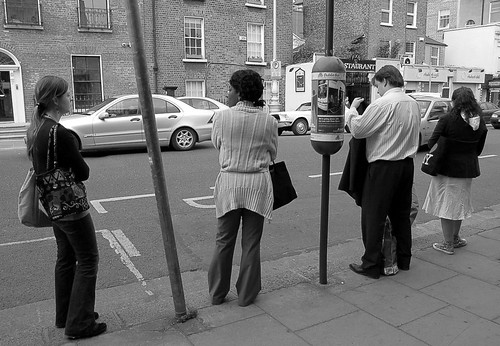
Sustainability: Smart Transportation: Bus Shelter

From trash to treasure: sustainability in product design

Sustainability: Preservation : Quad

Thursday, April 1, 2010

My Innovation Face

     I think two innovation faces fit me the best:  the anthropologist and the experience architect.  Something both these have in common is that they are open and revolve around what people will get out of design.  One of my favorite quotes is "People ignore design that ignores people."  Whenever I'm designing something I am thinking more of the experience the end product will create more than just the end product itself.  I like to people watch and observe different cultures and lifestyles.   I think it is important to do so for many, many reasons.   Looking at things from different perspectives and putting yourself in others shoes has a positive reflection on your character and your work.  Just as I am always looking for what inspires others I myself always keep things that inspire me close.  I love to be inspired.
  These two faces are in the learning and building categories.  Both which I think are hands on.  These faces will really add to our design thinking project.  I think the anthropologist makes a good teammate and researcher.  The experience architect will really push what the anthropologist does to the next level by building upon that knowledge and actually creating something.

Wednesday, March 31, 2010


[Learning]
The Anthropologist | humanistic approach.  social behavior related to design.  beginners mind. listen and look. observer.
The Experimenter | prototype. trial and error. experimentation as implementation.
The Cross -Pollinator | explorer. interested in other viewpoints. translates research. make things happen. show and tell. diverse background. stir the pot.

[Organizing]
The Hurdler | innovation. outsmarts overcomes obstacles.  barrier jumper. perseverance. do more with less.
The Collaborator | come together.  leads from the middle. multidisciplinary solutions. stir the pot.
The Director | gathers talent. sparks and inspires. launches.

[Building]
The Experience Architect | design experiences.  connect at a deeper level. creates positive encounters. fend off the ordinary. focus their energy. packaging experience. journey.
The Set Designer | creates a stage. makes a greenhouse. physical environments as tools. nourish team. sustain  creative culture. improvements.
The Caregiver | care beyond service. human touch. deeper level. anticipates needs. heart of team.
The Storyteller | internal morale. external awareness. building the fundamentals. human value.  support.

Wednesday, March 17, 2010

Turn your Barrier into Bridges

Barrier : Bridge

Forcing people to interact might make them shy awa
y : Provoking people to interact is more successful

People won't relate and interact : commonalities make people relate

We don't have enough money to build it :  We can use donated and found items.  Plus we are just getting up to the prototype stage of design

People will not interact :  If the design is appealing it will draw people in and in turn they have the opportunity to interact with each other

It is one design that must coincide with various sites and activities :  This is a prototype and can be altered to be more site-specific but a prototype design is used for many things in different places- i.e. mailbox, street signs, etc.


Wednesday, March 3, 2010

Design Thinking Project Proposal

  • laptop+printer+scanner combo
  • bike bag|more comfortable to ride with and doesn't get in the way
  • shower caddy|for dorm life
  • dog park|for more than the dogs, owners can multitask here
  • a bike+music deal that makes it easier to listen to music while riding, no dangerous headphones+spokes combo
  • a design thinking app
  • an outdoor sit-down area that makes it easy for students to do work outside
  •  integration+interactive wait or rest spot|perhaps in metro stations, bus stops, waiting at the pharmacy or an office waiting room
  • an interactive display area for campus' to display different pieces of work from all majors and areas
  • rainwear|rethinking boots+umbrellas+rain jackets
  • adopt a street, road or highway|a more site-specific design thinking project
  • carry bag|we often use the same type of carry bags as years and years before while we have many more gadgets than in the past

Sunday, February 28, 2010

Our Very own Greenhouse

I'm purposing to temporarily move our classroom to Tate Street Coffee for many reasons but mainly; it's different.  It is full of colorful people and layers of character and inspiration on the walls...and ceiling.  It is lively but (at the time we would be using the space) not distracting.  The third picture shows a perfect little corner for us...minus the band, which wouldn't be there during our time of use.  There are tables for workspace, Wifi for research, and coffee for a push.  Unlike our space now this spot has its own atmosphere.  Like our readings suggested this space will make our brainstorming thrive.  I believe it has just the right balance of privacy and community and it is a very interactive space.  It is celebratory in its decor and like our hot-group- very diverse.  It is just the atmosphere we need to embark on our next project.


And if that's not enough, Here are TSC's top 10 reasons to visit

10. Our big smiles prove coffee doesn't stain your teeth.

9. Mrs. Folgers' freeze dried crystals revealed as a hoax.

8. Tate Street Coffee keeps you regular.

7. You gain a coffee buzz just shaking the owner's hand.

6. If you don't have a dog, you can pet the ones that hang out there.

5. Peru Organic doesn't show up on any of my drug tests.

4. You can grope all the buns you want before you put your money down.

3. You get addressed by your name, or some variation of it.

2. It's on the right side of the street on the wrong side of town.

1. It smells good!

Thursday, February 25, 2010

Visual Presentations: Everett Harlan

I think Everett's visual presentation could use more of an underlying concept to push what he is trying to portray further.  Maybe if he started with brainstorming about what the overall message his material is saying it would help him develop that concept.  I would suggest incorporating what text he does use into a more aesthetic form than simply the bullet points on each page.  Also I think that the images he selected should have been more consistent in their style to really get the message across that these are various individuals that make up one group or team.

Prototype This!

When reading and watching clips about what 'Prototype This!' is all about I found a strong connection to IDEO's team.  When being introduced to the guys I thought back to what we've learned about hot-groups.  The guys were all passionate and purposeful in their work and although don't look really diverse, they all have their specific backgrounds and specialties.  This show is a little like Myth Busters but instead of applying prototyping and design thinking to prove past myths or theories, the guys at Prototype This prototype to evolve into the future.  Their passion as well as the shows childlike and futuristic elements draw people in.  Just like other designers we have looked at these guys dive in and get hands on with building their ideas.  The cast seems to have more of a technological approach to the prototyping process but that is fitting for their projects.

Monday, February 22, 2010

Hot Group Visual Presentation


This is the last slide of my presentation.  It is similar to the first except for the middle block.  I used geometric shapes and colors with that had contrast but were muted to create a pattern for each slide.  This pattern is consistent throughout the presentation.  I created small characters that portrayed the concept of each hot-group-character.  I used snippets of each of these to make each color block a thumbnail of what was to come on each slide.  I made them faint enough that the lines don't distract you but add to the hierarchy.  On each slide one full character is revealed sticking to the original block it was previewed in on this slide.  

Wednesday, February 17, 2010

What Type Are You?

I took this 'What type are you quiz?' that Patrick showed us; 
 I am
 E[motional] 
U[nderstated]
P[rogressive]
D[isciplined]
Which means my type is...
Archer Hairline


I was on the fence as to wether or not I was more understated or assertive because I'm always [too] blunt with my opinion yet I do know when I should bite my tongue or how to say something in a softer way.  If I had gone with assertive over understated my typeface would have been 
Architype Van Doesburg

Tuesday, February 16, 2010

...And then there was the hot group

I think the most successful hot groups contain a cohesive variety of innovative people that all have a passion for the project at hand.  If the group has a level of diversity it creates more ideas and can build upon them on various levels from different perspectives.  A strong passion is a must.  It is what will keep the group working towards a common goal therefore keeping the group working together versus against each other.  I think that size is relative to the project at hand.  You need a good amount of people to generate a good amount of ideas and enough hands to carry the ideas out yet not too many people as to crowd the process.  I have been in groups before where there are one, or so, too many people and it ends up that the stronger group members hand off odd jobs to weaker group members: odd jobs that don't really progress the groups work.  I do like when more parties get involved in a project; it can only further the development, but I believe this to is relevant to the project at hand.  For example last year I was involved in a redesign of the Tate-Oakland-Highland parking lot and we called in campus police, groundskeepers, students, staff and many more people but some of those positions would not relate to other projects I have done such as a renovation proposal of the UNCG Foods Lab in which we called in Nutrition professors, slow-food advocates, the Chancellor etc..  Also when within the design process these individuals intervene in important.  Overall the hot group should be specific to the project and should always have a strong passion and rich variety.

Sunday, February 14, 2010

Brainstorming+Apathy

One brainstorming technique that I use is sensory diagrams.  Good design revolves around the people that use it and by looking at how all of a persons senses could or would interact with a space can really help sort out priorities and analyze what you want the experience of that space to be.  I think that this technique is mainly directed towards designing a space for someone; wether it be a stage, a room, or a shelter but I do believe this technique could be applied in other disciplines.  I think most of the brainstorming techniques we studied can cover a broad range of disciplines.


"The opposite of good is not evil.  The opposite of good is apathy."

In my major we work in groups quite often and there is always a hierarchy within the groups pertaining to how much someone cares and how much time and input someone contributes.  Maybe its the pace in which we carry out our projects but to me that one...or so...people in the group who just don't care, is not going to bring me and my ideas down.   If they aren't carrying any of the weight it doesn't change the level of hard-work I will put in , it's just a shame that they can't help contribute but only will I make an issue of it when they go beyond the point of not carrying weight into the realm of being dead weight and dragging the rest of the group down.  I would rather have a group member who has different opinions than me rather than just being indifferent to the entire project.  I think that different opinions can only push a group into analyzing the project and birthing more new ideas.

Wednesday, February 10, 2010

The Second Life of a Water Bottle

We are a throw-away society; but when you throw something away do you ever think about where 'away' is?

Less than 1 percent of all plastic is recycled. Therefore, almost all plastics are incinerated or end up in a landfill.  Plastic bottles to be specific; Eight out of ten plastic bottles will end up in a landfill.  As a design thinker I begin to wonder what kind of second, third and so-on lives these plastics could have. A plastic-bottle-boat was made to sail from San Francisco to Sydney Australia. If that can be done who's to say we can't use these water bottles that we toss daily for the use of everyday things? 


Did you also know that  our city has 1100 bus stops but only 64 bus shelters?  As an Interior Architecture major I saw the then second years tackle this problem by creating a bus shelter prototype. Both this and recycling is a problem for not just our city.  I propose we use the plastic-bottle waste we create to turn it into something positive: bus-shelters. The idea is simple but the impact could be dramatic.

Tuesday, February 9, 2010

Deep Dive: Questioning the design of everyday things

The beach chair needs to be redesigned for a few reasons.  The design is not practical in sand nor is it a practical design for carrying.  The only thing that makes a beach chair specific to a beach is maybe the fabric used and the fact that it can fold up.   Otherwise it does not meet many of the needs that one has when using the chair.  It could be greatly improved to be easier to travel with, more logical and steady and to serve as more than just a seat. 


Monday, February 1, 2010

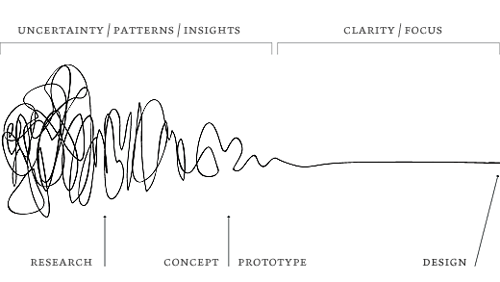
Design Thinking

     I didn't come into the Interior Architecture to paint your living room.  Although in my iarc classes we are still discussing the difference between Interior Architecture, Architecture, and Interior Design: What I get from the program is a very broad and deep sense of successful design.  Whether it be a 'Place for a leaf' (don't ask.), a chair, a vacuum, or a building.  Design thinking is a mentality that all of us have.    I was aware of this when I came into this class the first day, but when we all went around and said our majors, the variety of disciplines still threw me off.  Since that first day our work in the class has really broaden my sense of design outside of the iarc program.  Design doesn't fit into a category, or a box. It doesn't fall under one major.  The mentality is in all of us and brought out in a variety of practices.    Design is something larger than yourself.

"You may say I'm a dreamer, but I'm not the only one. I hope someday you'll join us.              And the world will live as one." — John Lennon

     One thing I've realized through reflecting on this is that design thinkers are really design do-ers.  Designers are inspired by the past and concerned about the future.  They,...we , add collaboration and input to our inspiration, insight, dreams and ideas and then take that theory and do.  We take risks and put our ideas to work; then we re-work them...and re-work them...and re-work them.  The collaborative effort of reworking and refining our ideas make up the design process that is so hard to define.  Like I said before  design and designers don't fit into a box so I think it is hard to define design thinkers because through all the commonalities design is not concrete: it is ever-changing and always growing which is what makes it so stimulating in the first place.

 in the mentality of design thinkers...


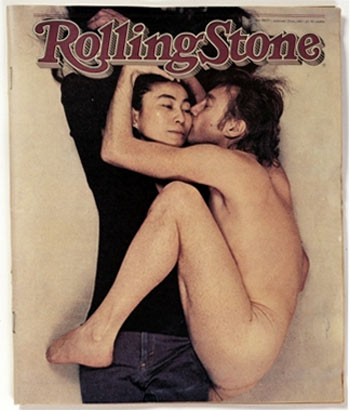
    There is a lot of things about John Lennon that make him a design thinker.  As one of the most controversial members on The Beatles, Lennon certainly doesn't fit into a category.  He was not only a musician:  He was an activist, a writer, an artist, a record producer and dreamer.   Like Charles and Ray Eames', Lennon and his second wife Yoko Ono were quite the power couple.  The Beatles was one of the greatest collaborations of the their time...and of all time.  

"My role in society, or any artist's or poet's role, is to try and express what we all feel. Not to tell people how to feel. Not as a preacher, not as a leader, but as a reflection of us all."-Lennon
 
"As usual, there is a great woman behind every idiot." -Lennon


John Lennon 1940-1980
"Everybody loves you when you're six foot in the ground. "-Lennon


Wednesday, January 27, 2010

Creative Space


Pictured above,  Thomas Edison's laboratory and the Eames' office space, are two different spaces that served and inspired their users in a way that was functional and pleasing to each.  Our studio spaces should inspire us to work as a cohesive part of the design process.
Edison's laboratory is a very open space.  The space itself is tall and raw and Edison's things are displayed openly within the space, rather than stuffed in cabinets.
There is something whimsical, something magical about the Eames' office.  Inspiration and ideas hung on the walls and tucked into the nooks and crannies add character and a childlike essense that creates such a delightful workspace.  The space is beaming with motivation and enthusiasm.

Our spaces should stimulate and energize us; provoke thoughts and visions. Inspire.


A wall of inspiration.
An inspiration drawer.
An inspiration journal.
Inspiration. Key.
I have tons of little things that provoke big ideas and I think it's important to not only keep these things but to display them or have them handy so you can later pull from them.


I myself don't like to be stuck inside to do my work.  Being outside inspires me, so I love the idea of a little...maybe not this little...backyard studio.
I also like the proximity to home but still being able to keep your work at arms length when you're done for the day.

I could go on and on and show tons of pictures of creative spaces but the common thread is that they bring out your creative side. They are functional and motivating.


Friday, January 22, 2010

Two Minds Are Better Than One::Collaboration in Design

      
"Great designers need great clients" -I.M. Pei 

     The design process is a journey that is never taken alone.  Like we talked about in Tuesday’s class, looking at something from other perspectives can only make us more aware.  If I were to take on a design without getting advice or input it would be tremendously less successful.  In some of my other design classes we have been discussing Interior Architecture versus Architecture and in discussing this I have become more aware of just how many groups of people become interdependent factors in your design. 

      In the beginning there is you- the designer, you have a source of inspiration, and whether it’s a person or object that thing is something you carry with you throughout the design process that shapes the end product.  It is the simplest kind of collaboration; it is you and your inspiration and ideas in your mind.  This is all before the people come into play. Whether it is a client, a partner, an engineer, or an expertise, all of these people are factors that mold your design.  Your ideas provoke input and input shapes your ideas.

       One of the most important relationships in the design process is between the designer and the client.  It’s kind of like 'If Mommas not happy, nobody’s happy.'  In the end if the design and client aren't happy, nobody. is happy. 


Meet Louis I. Kahn: one of the most influential designers of the twentieth century.  By his side, Jonas Salk: developer of the polio vaccine and one of Kahn’s most influential clients.  This six-year collaboration resulted in The Salk Institute for Biological Studies.   One of the most noted pieces of work of Kahns career


I haven't pictured The Salk Institute here because I think this video does it more justice than a still-frame and elaborates on the relationship between Salk and Kahn.

Wednesday, January 20, 2010

Powers of Ten

The Eames' film, Powers of 10, shows the world from broader perspectives.  Looking at things in a greater context can exercise your mind to think in a more proactive way, in turn pushing you to make proactive decisions and designs that create positive change.  This type of design thinking causes a ripple effect.  In the film the ripple effect was shown by zooming out several times, each time into a broader perspective.  Everything is designed, whether successfully designed or poorly designed; and everything has connections that spread to a greater context.  Everything is relative, you just have to look at things in context and from different perspectives.  Design thinking is taking an innovative and strategic approach to a problem, and the process a designer goes through to come up with an effective solution that not only solves a problem- but plays a part in a ripple effect that can shape our world.